

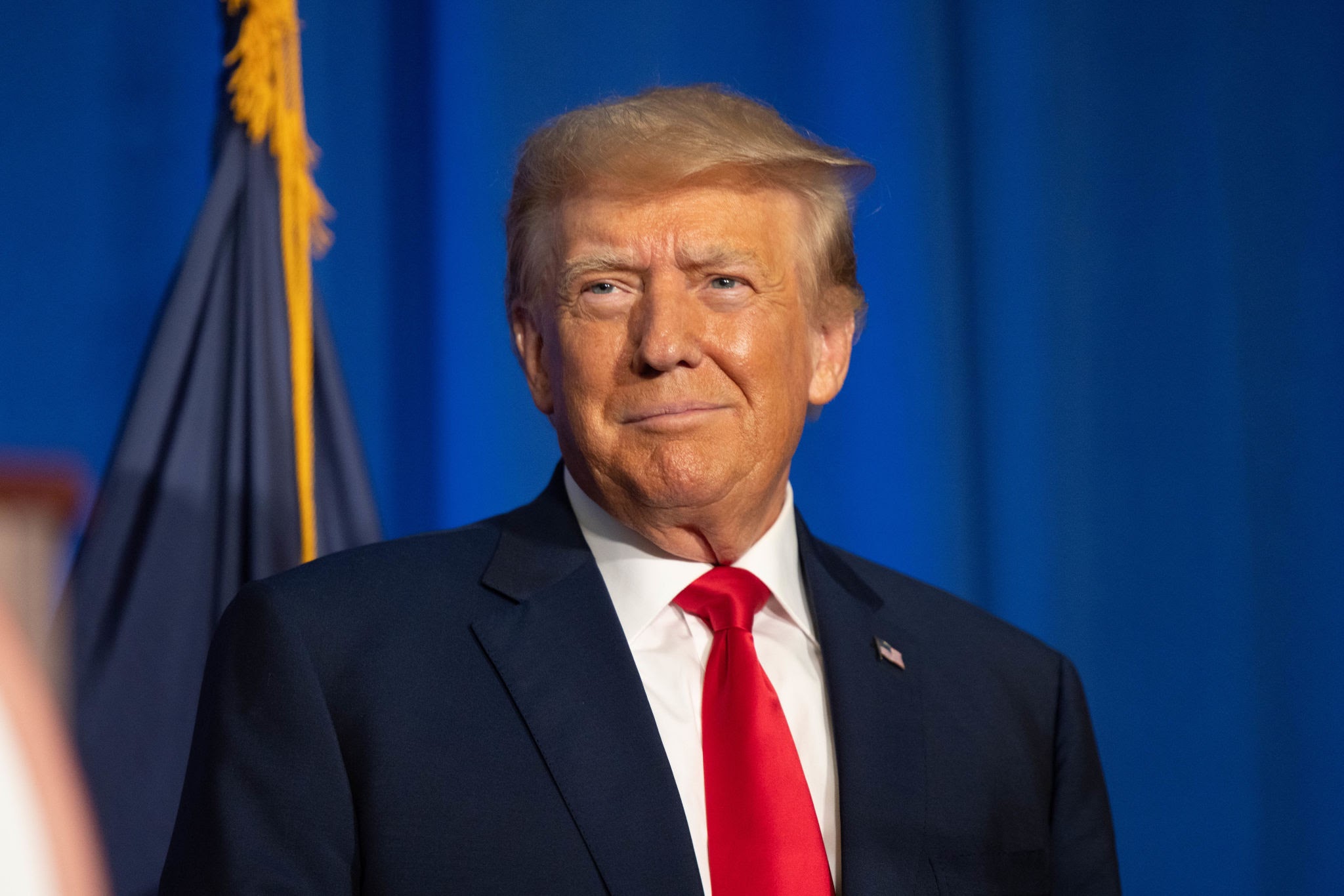
US President Donald Trump has congratulated the Democratic Party on its victory in the midterm elections, while identifying the war against Iran and rising gasoline prices as some of the factors responsible for his Republican Party’s poor performance.
Despite an aggressive campaign by Trump to secure victory for his party, Democrats recorded significant gains, breaking into traditionally Republican strongholds and securing control of both chambers of Congress.
Reacting to the outcome, Trump acknowledged the Democrats’ victory, describing their performance as impressive, but insisted that the result should not be viewed as a personal rejection of his leadership.
“Well, I say this: congratulations to the Democrats. They did a good job. They’ve been looking for this one for 11 years, and they finally got it. But I don’t view it as a hit on me,” Trump said in a telephone interview with FOX News Democracy 26.
The President also expressed willingness to work with the Democrats, who are set to take control of Congress.
“I can work with them on many things,” he said.
However, Trump admitted that the ongoing conflict with Iran may have contributed to the Republican Party’s losses, particularly because of its impact on global oil prices and the cost of gasoline in the United States.
“I think a part of it was Iran, but at the same time, people agree with what I’m doing on Iran, but they really probably weren’t willing to do the short-term consequence of paying more for gasoline,” he told Fox News.
The war has disrupted global energy supplies following restrictions imposed by Iran on shipping through the strategically important Strait of Hormuz, a major route for international oil shipments.
The disruption triggered a surge in global crude oil prices, with rising fuel costs adding to economic concerns among American voters.
Meanwhile, Trump has indicated that he would resist legislative moves by the incoming Democratic-controlled Congress, posting a picture of a red baseball cap bearing the inscription “VETO” on social media.
“They can send over, you know, 50 different great bills that they’re all excited about, and I send them back with a nice stamp — ‘veto,’” he declared.
The Democrats recorded significant breakthroughs in the Senate, including victories in Kansas and Iowa, traditionally Republican-leaning states.
In Kansas, Methodist minister Adam Hamilton defeated Republican incumbent Roger Marshall, becoming the first Democrat elected to the Senate from the state since 1932.
Iowa also elected a Democratic senator for the first time since 2008, further demonstrating the party’s gains in Republican strongholds.
The victories followed Democratic successes in Texas, South Carolina, North Carolina and Ohio, where voters rejected Republican candidates despite Trump’s efforts to rally support for his party.
Democrat James Talarico defeated a Trump-backed Senate candidate, while Gina Hinojosa unseated Republican Governor Greg Abbott, ending decades of Republican control of the state’s top office.
Democrats also retained key Senate seats, including Jon Ossoff’s in Georgia and an open seat in New Hampshire.
The Republican Party had previously controlled the Senate with a 53-47 majority. However, the Democrats’ six-seat gain was sufficient for networks to project a takeover, although some races remained unresolved.
The party also captured the House of Representatives after flipping Republican-held districts in states including Pennsylvania, New Jersey, Kentucky, Arizona and North Carolina.
Some of the victories came in areas Trump had comfortably won during the 2024 presidential election, despite Republican efforts to protect vulnerable seats through electoral boundary redrawing.
In Indiana, Democrat J.D. Ford defeated Republican Congresswoman Victoria Spartz in a district Trump had won by 17 percentage points, in what analysts described as an indication of the wider Democratic advance.
In Georgia, former Atlanta Mayor Keisha Lance Bottoms became the first Black woman elected governor in US history, while Democratic gains extended to several state legislatures across the country.
Republicans, however, recorded some victories in Florida, where Trump-backed Byron Donalds won the governorship, becoming the state’s first Black governor, while Ashley Moody retained a Senate seat.
Commenting on the outcome, George Washington University professor Todd Belt described the Democratic gains as “a big wipeout and a strong repudiation of Donald Trump and his policies.”
He attributed the Republican setback to voter concerns about the economy, corruption and the Iran conflict.