
There are moments when an act of generosity goes beyond the value of money, the number of items distributed or the applause that accompanies a public ceremony. Such moments are measured instead by the opportunities created, the burdens lifted and the possibilities opened up in the lives of people who might otherwise have struggled to find their footing.
It is this deeper meaning of giving that provides an interesting lens through which to examine the Yahaya Seriki Empowerment and Enterprise Colloquium 2026, organised by Ambassador Abdulfatai Yahaya Seriki Gambari in Ilorin, Kwara State.
At a time when unemployment, rising living costs, limited access to capital and the challenges of running small businesses continue to confront many Nigerian households, the initiative raises an important question: What happens when philanthropy moves beyond the traditional practice of giving handouts to providing people with the resources to build sustainable livelihoods?
For the beneficiaries of the October 31, 2026, intervention, the answer could lie in the opportunities that the resources placed in their hands will make possible.
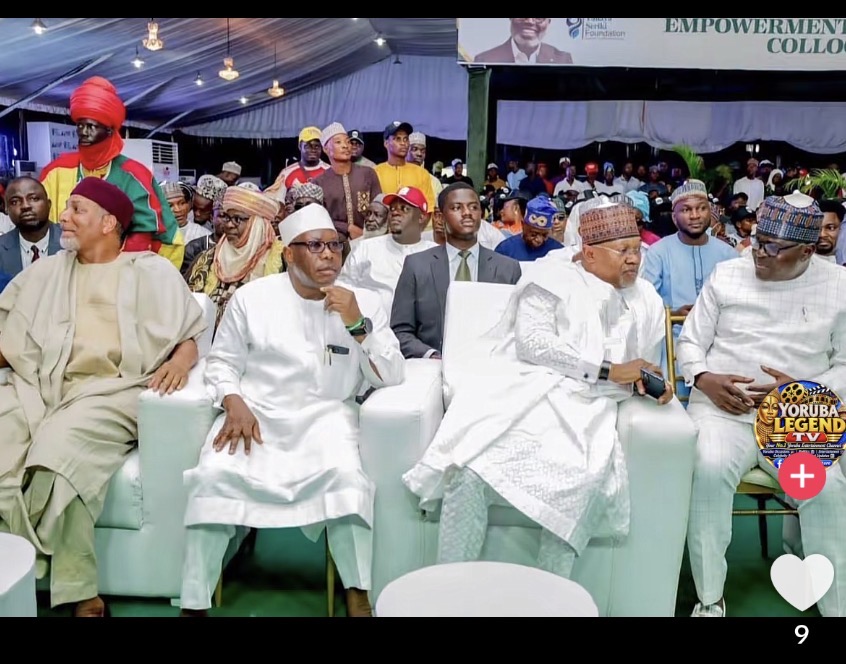
Held at the ARCA Santa Arena, Ilorin, the Yahaya Seriki Empowerment and Enterprise Colloquium brought together entrepreneurs, business leaders, community stakeholders and other dignitaries under the theme, Beyond Empowerment: Building Enterprises, Creating Wealth, Transforming Lives.
But beyond the gathering and the conversations around enterprise development, it was the scale and variety of the empowerment package that drew attention.
Through the Yahaya Seriki Foundation, with support from Kursi Investment Limited, Ambassador Seriki unveiled an empowerment package reported to be worth approximately N4 billion. The intervention included about 150 vehicles valued at N3.2 billion, N1 billion earmarked for cash empowerment, industrial sewing machines and mini household solar systems.
Beneficiaries were drawn from across Kwara State, including its 16 local government areas.
The figures are significant. Yet, perhaps more important is what each component represents to the individuals receiving it.
WHEN GIVING BECOMES AN INVESTMENT IN PEOPLE
A vehicle, in the hands of one beneficiary, could represent the beginning of a transport business, a new source of income or the opportunity to overcome mobility challenges that have limited personal and economic activities.
For an artisan receiving an industrial sewing machine, the gift could be the beginning of a fashion enterprise, an expansion of an existing tailoring business or the opportunity to employ another person.
For a household receiving a solar system, it could mean improved access to basic electricity for everyday activities and possibly greater productivity.
And for someone receiving financial assistance, the money could provide the capital needed to purchase stock, acquire equipment, rent a business space or revive an enterprise that had been struggling.
This is where the distinction between ordinary giving and enterprise-oriented empowerment becomes particularly important.
Rather than concentrating solely on immediate financial relief, the initiative provides different categories of resources that can potentially translate into income-generating activities.
It is an approach that recognises that people do not always need the same form of assistance. While one person may need capital, another may require equipment, transportation or access to basic infrastructure to make progress.
In this sense, empowerment becomes more meaningful when it responds to the actual economic needs of its beneficiaries.
THE MAN BEHIND THE INITIATIVE
For Ambassador Abdulfatai Yahaya Seriki Gambari, the initiative is presented as part of a broader commitment to giving back to society and creating opportunities for people to improve their livelihoods.
As Chairman of Kursi Investment Limited and founder of the Yahaya Seriki Foundation, Seriki has combined his business activities with philanthropic interventions in Kwara State.
His motivation, as reported at the colloquium, was rooted in the desire to extend the benefits of his success to others and help people become economically independent.
He also had a message for the beneficiaries: the resources received should be invested wisely and used to build a better future.
It was a call for responsibility, one that recognises that receiving assistance is only the beginning. The more difficult task is managing that opportunity and turning it into something sustainable.
Indeed, the true value of an empowerment programme is not determined only by what is distributed on the day of the event, but by what beneficiaries are able to achieve afterwards.
A HISTORY OF GIVING
The 2026 colloquium also builds on earlier interventions associated with the Yahaya Seriki Foundation.
In November 2023, the foundation reportedly supported more than 1,800 beneficiaries in Kwara State with an empowerment package valued at over N250 million.
The beneficiaries included artisans, students, market women and men, petty traders and other vulnerable individuals. The intervention covered financial grants, business support and educational assistance.
The foundation’s earlier activities provide context for the latest initiative, suggesting that its empowerment efforts extend beyond a single event.
The 2026 programme, however, stands out for the scale of its reported financial commitment and the diversity of the assets made available to beneficiaries.
It also reinforces the argument that private individuals and business organisations can contribute to economic development by supporting people at the grassroots level.
BEYOND THE CEREMONY: THE HUMAN STORY
Perhaps the most compelling part of any empowerment programme is not the presentation of cheques or the unveiling of expensive assets. It is the human story behind each beneficiary.
Consider the young person who has an entrepreneurial idea but lacks the equipment to begin. Consider the woman who has spent years working with inadequate tools and suddenly receives the machinery to expand her business. Consider the family whose economic circumstances could improve because one member now has access to a new source of income.
These are the possibilities that give empowerment its human meaning.


For a young entrepreneur, a vehicle could be the foundation of a business. For a tailor, a sewing machine could increase production and create employment opportunities. For a small trader, financial assistance could provide the capital to expand beyond subsistence trading.
And for the families connected to these beneficiaries, the benefits could extend beyond the immediate recipients.
This is the multiplier effect of productive empowerment: one opportunity can potentially create several others.
However, the realisation of these possibilities will depend on how beneficiaries manage their resources, the support available to them and the economic environment in which they operate.
PHILANTHROPY, BUSINESS AND SOCIAL RESPONSIBILITY
There is also a wider conversation to be had about the relationship between wealth creation and social responsibility.
Businesses do not operate in isolation from the communities around them. They depend on people, infrastructure, security and an environment that allows economic activities to thrive.
When successful entrepreneurs reinvest part of their resources in the development of individuals and communities, they contribute to a broader culture of shared responsibility.
This does not absolve government of its responsibility to create jobs, provide infrastructure, support businesses and establish an enabling economic environment. Rather, it demonstrates how private-sector and philanthropic interventions can complement public efforts.
The challenge, however, is ensuring that such interventions are sustained, transparent and properly monitored.
The political dimension of the initiative is also part of its wider public context. Reports on the event noted Seriki’s support for President Bola Tinubu and Vice-President Kashim Shettima ahead of the 2027 general elections. That context is relevant to understanding the public profile of the organiser, but the economic impact of the empowerment should ultimately be assessed through the opportunities created and the outcomes recorded by beneficiaries.
THE REAL TEST BEGINS AFTER THE APPLAUSE
For all the impressive figures associated with the Yahaya Seriki Empowerment and Enterprise Colloquium, the most important chapter of the story is yet to be written.
It will unfold in the months ahead, when beneficiaries begin putting their resources to work.
Will the vehicles become viable sources of income? Will the sewing machines lead to thriving fashion businesses? Will the cash grants strengthen existing enterprises or help new ones take off? Will the intervention create employment beyond the immediate beneficiaries?
These are the questions that will determine the long-term value of the programme.
A successful empowerment initiative should not end with distribution. It should ideally be followed by monitoring, business guidance, mentorship and opportunities for beneficiaries to learn from one another.
Such support can help transform an initial intervention into a sustainable enterprise-development programme.
For the Yahaya Seriki Foundation, documenting the progress of beneficiaries could also provide an important measure of the initiative’s impact and help identify areas for future intervention.
WHEN GENEROSITY CREATES A LEGACY
Ultimately, philanthropy is about more than the resources transferred from one person to another. It is about the opportunities those resources create and the possibilities they make accessible to people who need a helping hand.
The significance of the Yahaya Seriki Empowerment and Enterprise Colloquium should therefore not be restricted to the number of vehicles distributed, the amount of money earmarked or the value of equipment presented.
Its enduring significance will be seen in the businesses that emerge, the livelihoods that improve, the families that become more financially secure and the additional opportunities that may be created within communities.
For a beneficiary, the intervention may be the beginning of a new chapter. For a family, it may represent relief from years of financial pressure. For a community, it could become a source of new economic activity.
And for society, it offers an opportunity to reflect on the importance of individuals and institutions using their resources to create pathways for others.
Perhaps that is the deeper meaning of philanthropy that transcends calculation.
It is not simply about how much is given, but how many lives can move forward because someone chose to give.
The true value of philanthropy is not always measured by what is given, but by what the recipient is able to become because someone gave.